Currently Empty: R0.00

Solar Panel Orientation: Why Tilt and Direction Matter
Correct solar panel orientation is one of the most important factors affecting the performance of a solar energy system. Even premium solar panels cannot produce their maximum potential if they are installed at the wrong angle or face the wrong direction.
By choosing the best orientation and tilt for your location, you can increase energy production, improve efficiency and maximise the return on your solar investment.
What Is Solar Panel Orientation?
Solar panel orientation refers to the direction your solar panels face.
The direction determines how much sunlight reaches the panels throughout the day.
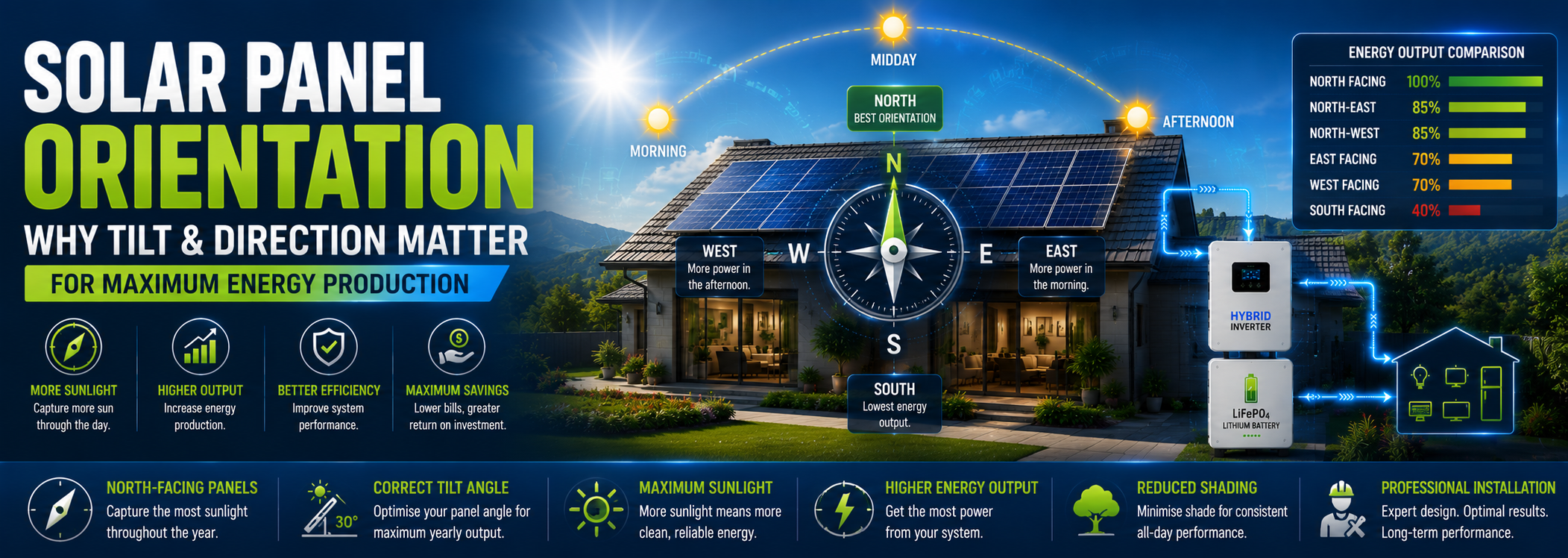
For properties in the Southern Hemisphere, north-facing panels generally receive the greatest amount of sunlight over the course of the year.
However, east- or west-facing installations can also perform well depending on your energy usage patterns.
Why Tilt Angle Is Important
The tilt angle is the angle between the solar panel and the ground.
The correct tilt helps the panels capture more sunlight and allows rainwater to wash away dirt and dust more effectively.
A suitable tilt also improves year-round energy production.
Best Solar Panel Orientation in South Africa
South Africa enjoys excellent solar resources, making it one of the best countries for solar energy.
In most locations:
- North-facing panels produce the highest annual energy output.
- North-east and north-west orientations also provide excellent performance.
- East-facing panels generate more electricity in the morning.
- West-facing panels produce more energy in the afternoon.
A professional installer can recommend the best orientation based on your roof design and electricity consumption.
Factors That Affect Solar Panel Orientation
Several factors influence the ideal installation.
Roof Design
The shape and direction of your roof may determine the available installation options.
Shading
Trees, neighbouring buildings and chimneys can reduce solar production even if the panels face the correct direction.
Energy Usage
If your household uses more electricity in the afternoon, a west-facing installation may better match your consumption.
Mounting System
Modern mounting systems allow installers to optimise panel angles on many roof types.
Can Flat Roofs Support Solar Panels?
Yes.
Flat roofs often provide excellent flexibility because installers can use mounting frames to achieve the ideal tilt and orientation.
This allows panels to face the most productive direction regardless of the roof’s original design.
Common Mistakes to Avoid
Avoid these common installation errors:
- Ignoring roof shading
- Choosing the wrong panel angle
- Installing panels too close together
- Blocking airflow beneath the panels
- Prioritising appearance over performance
Professional system design helps prevent these issues.
Frequently Asked Questions
Do solar panels have to face north in South Africa?
North-facing panels generally provide the highest annual energy production, but other orientations can still perform well depending on your electricity usage.
Can I install solar panels on a flat roof?
Yes. Mounting systems allow installers to set the correct tilt and orientation.
Does the tilt angle affect energy production?
Yes. A properly selected tilt angle helps maximise annual electricity generation.
Can I change the orientation later?
Changing orientation is possible, but it usually requires modifications to the mounting system.
Conclusion
Choosing the correct solar panel orientation is essential for maximising energy production and improving long-term system performance. By selecting the best direction, using the correct tilt angle and avoiding unnecessary shading, you can get the most from your solar investment.
Working with an experienced installer ensures your system is designed to match both your property’s layout and your energy needs.